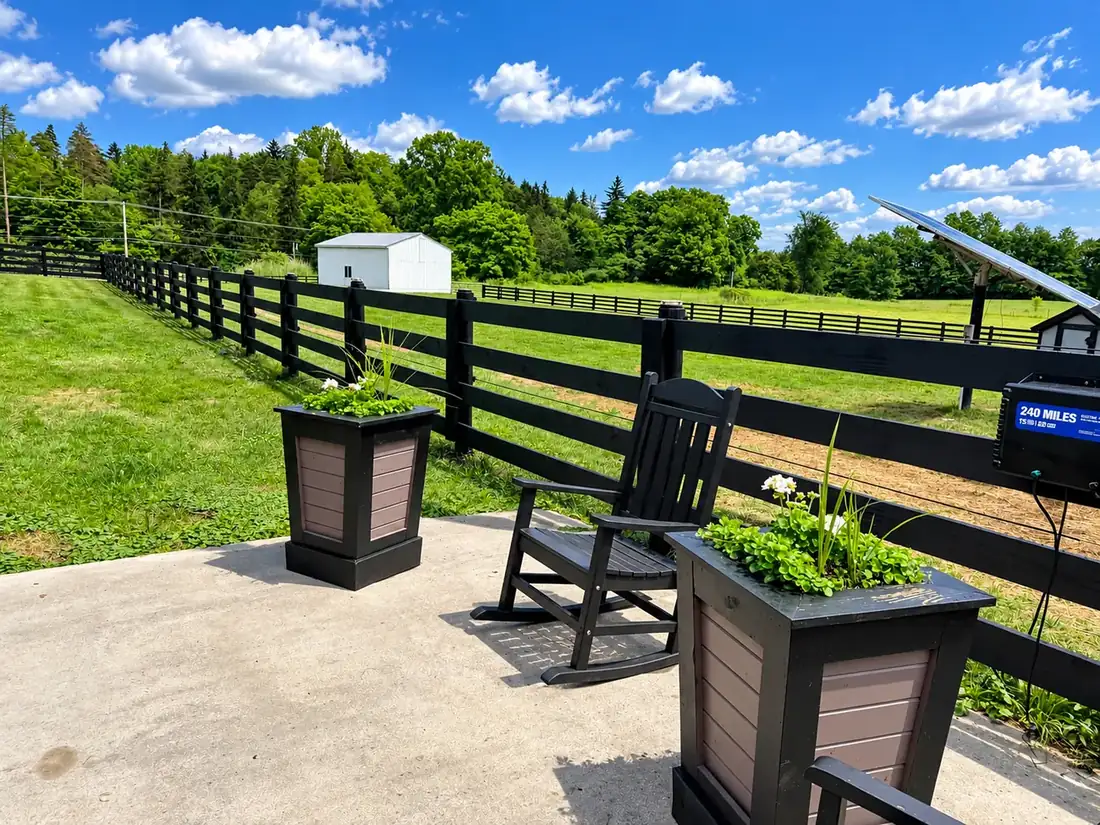
Who decides whether your fence needs a permit
A local office decides, not the state. In Ohio we found no statewide fence permit. The state building code statute, ORC 3781.06, defines residential buildings and accessory structures without mentioning fences, so the rules that bite come from zoning. Ohio townships can regulate the location, height, bulk and size of structures and the yard and setback lines by zoning resolution (ORC 519.02), and Ohio municipalities can limit the height, bulk and location of buildings and structures (ORC 713.06).
Pennsylvania has a state building code, the Uniform Construction Code, and it speaks to fences directly. It exempts residential fences no more than 6 feet high from a UCC permit, and the commercial exemption covers fences not over 6 feet. Both apply only if the work does not violate another law or ordinance. A fence over 6 feet therefore needs a UCC permit, and a borough or township can still require its own zoning permit for any fence. Over 90 percent of Pennsylvania's 2,562 municipalities enforce the UCC locally, and zoning is set by each municipality.
| Question | Ohio | Pennsylvania |
|---|---|---|
| Statewide fence permit | None found | None for most residential fences up to 6 feet under the UCC |
| Fence over 6 feet | No state source we could confirm, so ask locally | UCC permit required |
| Who sets height and setbacks | Township zoning resolution, or city or village zoning | Municipal zoning under the Municipalities Planning Code |
| Who gives the final answer | Your local zoning office | Your local zoning office |
County by county, who to call
The right office depends on where the lot sits, and in several of these counties the answer is the township, city or village, not the county. The table below lists what the published sources say for the Ohio and Pennsylvania counties closest to our base in Bristolville. Rules vary by township and municipality, so confirm with the local office before you rely on any row.
| County | Who to call | What the sources say | Official page |
|---|---|---|---|
| Trumbull, OH | Trumbull County Planning Commission, 185 E. Market St NE, Suite A, Warren, (330) 675-2480 | Zoning is handled locally. There is no county-wide zoning. Only four townships have none: Brookfield, Mecca, Mesopotamia and Vernon. | co.trumbull.oh.us/planning, Plats and Zoning page |
| Trumbull, OH (Bristol Township) | Bristol Township zoning inspector, 330-889-2246 ext. 3, by appointment only | The township has a zoning resolution. It can be viewed at Bristol Public Library, 1855 Greenville Road. Fence rules were not on the township web page. | bristolvilletownshipoh.gov/zoning |
| Ashtabula, OH | Your township zoning office. We found no county office for fences. | Permits are township level. One township's zoning permit application has a Fence checkbox and asks for a site plan and setbacks. | harpersfield.us, zoning permit application |
| Mahoning, OH | Your township, city or village for zoning. Mahoning County Building Inspection, 50 Westchester Dr, Room 201, Youngstown, (330) 270-2894, for building permits. | Zoning permits come from the township, city or village. The county document does not say who handles fences. Youngstown publishes a Residential Fencing FAQ. | csea.mahoningcountyoh.gov permitting PDF and youngstownohio.gov |
| Geauga, OH | Geauga County Planning Commission, (440) 279-1740, then the zoning inspector for your community | The county publishes a list of zoning inspectors by community (May 2024). It shows 20 communities with inspectors, and Middlefield Township has no zoning in effect. | bocc.geauga.oh.gov, Zoning Inspectors by Community |
| Portage, OH | The zoning inspector for your township | The county zoning page lists township inspectors and phone numbers. Deerfield voted out zoning in 2009. | portagecounty-oh.gov, zoning page |
| Mercer, PA | Mercer County Regional Planning Commission, 2491 Highland Rd, Hermitage, 724-981-2412, then your municipal zoning officer | Zoning is municipal. The commission says 30 of 48 Mercer County municipalities have zoning, and it links their ordinances. | mcrpc.com, municipal zoning ordinances |
| Lawrence, PA | Lawrence County Planning and Community Development, 430 Court St, New Castle, 724-656-2128, then your municipality | The county links a directory of municipal officials. Fence rules come from the municipality. | lawrencecountypa.gov, municipal directory |
| Crawford, PA | Crawford County Planning, 903 Diamond Park, Courthouse 3rd Floor, Meadville, (814) 333-7341, then your municipality | The county page we read does not mention zoning. Treat zoning as municipal and ask each one. | Crawford County Planning, Meadville |
Many rural addresses use a mailing town that differs from the township the parcel sits in, so confirm the township before you dial. The county planning offices above can usually help with that.
How to read a township zoning resolution
Read the resolution in a fixed order. Ohio townships adopt a zoning resolution, which is the document the zoning inspector enforces. Bristol Township, for example, keeps its resolution at the public library as well as with the inspector.
- Definitions. Look up fence, structure, yard, front yard, lot line and accessory use. A fence may be defined on its own or lumped in with structures, and that changes which section governs it.
- The zoning map and your district. Rules differ by district, such as residential, agricultural or commercial. Find your parcel on the map first, then read only that district's section.
- Accessory structures or fences section. This is where height limits, setbacks and material limits usually sit. Heights are often lower in the front yard than in the side and rear yards, so check each yard separately.
- Corner lot and road frontage language. Corner lots and road frontage may carry extra limits, so look for sight line language at driveways and intersections.
- Permit procedure. Look for who issues the zoning certificate or permit, what the application must include, and whether a fence needs one at all. OSU Extension lists a fence among the projects that typically need a township zoning permit, with a site plan showing setbacks.
- Agricultural provisions. Read how the resolution treats agricultural land and uses. The state law behind this is covered further down.
- Variances and appeals. If your plan does not fit the rule, the resolution explains how to ask for a variance.
- Amendment dates. Resolutions change. Confirm that the copy you are reading is current by asking the inspector which amendments are in effect.
What to bring to the zoning office
Bring a drawing the inspector can read in one look. A site plan is a bird's eye sketch of your lot. It does not need to be professional, but it does need to be measured. A sketch on graph paper with distances from your corner pins to the house and the proposed fence line works for many offices.
- A site plan showing lot lines, the house, driveways, sheds, existing fences, wells, septic areas and any easements you know about.
- The proposed fence line drawn in, with total length, the position of every gate, and the distance from the fence to each lot line, which is the setback.
- Fence type, height and material.
- Your deed, plat or boundary survey if you have one, so the lot lines on the sketch match the record.
- HOA approval or the architectural review decision, if you live in a community with covenants.
- Any written agreement with the neighbor, if the fence is shared or sits on the line.
- The contractor's name and phone number, and a question for the office about who files.
When you ask for a FREE estimate, we can walk the route with you and note where gates and corners fall. How estimates work explains what we look at. Permit decisions stay with your local office.
Farm fences and the agricultural exemption
Ohio township zoning has limits on farms, but those limits do not clearly cover fences. ORC 519.21 says township zoning confers no power to prohibit agricultural use of land, and no zoning certificate is required for buildings or structures used for agriculture. Townships also cannot regulate buildings or structures, or animal husbandry, on lots greater than five acres. On lots of one to five acres, limited regulation of setbacks, height and size is allowed only in platted subdivisions or groups of 15 or more contiguous lots. Neither the statute nor the OSU Agricultural Law summary addresses fences specifically.
So whether a pasture fence needs a township zoning certificate is a question for the township. The statute does not settle whether a farm fence counts as a farm structure. Ask the inspector, and ask for the answer by email so you have it on paper. A board fence around a horse paddock, a woven wire pasture and a privacy fence beside the farmhouse can each land in a different category, even on the same parcel. See farm and ranch fence and horse fence for how we plan those jobs.
HOA covenants and deed restrictions
An HOA or deed restriction is a private rule, enforced by the association or by neighbors, and a town permit does not override it. A zoning office can approve a fence that your covenants forbid. Covenants may limit height, material, color, style, or where a fence can sit, and many require written approval from an architectural review committee before work begins. Ask the association or an attorney about your community's rules.
- Get the recorded covenants, not a summary.
- Keep the approval letter with your permit paperwork and give a copy to your fence contractor.
- Check whether the covenants address gates, dog runs or pool barriers.
Easements, roads, floodplains and pools
Several other limits sit on top of zoning, and none of them show up in a simple height chart.
- Utility easements. An easement may restrict where a fence can go. Check your deed or title work and ask the utility company. We did not research easement rules from an official source, so treat this as a pointer only.
- Public right-of-way. ODOT says driveway access, roadside obstructions and other work in its right-of-way need a permit, and PennDOT reminds owners that improvements affecting state highways need a Highway Occupancy Permit. Neither text names fences. Many roads belong to a township, county or municipality instead, so ask the local road authority how close to the road you can build.
- Floodplains. Pennsylvania municipalities issue a floodplain development permit before development in a mapped floodplain, and development is defined broadly. The state guide does not say whether fences are covered, so read your municipal floodplain ordinance.
- Pool barriers. Pool fences have their own rules. Pool barriers are commonly required to be at least 48 inches high with a self-closing, self-latching gate. Confirm the exact rule with your local building department, because pool codes and local handouts differ in detail. In Pennsylvania, an in-ground pool, any pool with water 24 inches deep or more, and hot tubs need a UCC permit.
Know where the line is before you ask
A permit application with the wrong lot line is a permit for the wrong fence. Setbacks are measured from the lot line, so the line has to be right. Ohio's boundary survey standards, in Ohio Administrative Code Chapter 4733-37, call for every property corner to be physically marked with a monument where practicable. Monuments should be durable, at least 30 inches long, carry the surveyor's registration number or name, and be detectable with a metal finder. Find your corner pins, review the deed and the recorded plat, and hire a licensed professional surveyor if the fence goes on or near the boundary.
The old fence is not always on the line. Tell your neighbor the plan before the stakes go in. The legal side of shared fences is on the fence law page.
What happens if you build without checking
The cost of skipping the call usually lands after the fence is up. In Pennsylvania, Penn State Extension reports that zoning violations can bring fines up to $500 plus fees under Municipalities Planning Code Section 617.2. For Ohio we did not find a single figure to quote, because enforcement is handled by each township or municipality. What the local office can ask for in practice is a question for that office.
- A fence set too close to the line, or too tall for the yard, may have to be moved or cut down.
- A fence on the neighbor's side of the line is a dispute, not a zoning problem, and it is expensive to move.
- A fence that breaks HOA covenants can bring a demand from the association, separate from the town.
- Digging without the utility notice is a separate problem. See calling 811.
The sequence from first call to a permitted fence
- Find the right officeConfirm which township, city, village or borough your parcel is in, then call that zoning office. Use the county table above as a starting point.
- Ask four questionsIs a permit needed, what is the maximum height in each yard, how far from the line must the fence sit, and are any materials or styles restricted.
- Check covenants and easementsRead the HOA papers and deed, and ask the utility company about easements on the route.
- Confirm the lineFind the corner pins and hire a surveyor if the fence goes on or near the boundary.
- Draw the plan and applyBring the site plan and measurements. Ask who files, you or the contractor, and get the answer before you sign.
- Call 811 before diggingThe crew that digs places the notice. The waiting period is built into the schedule.
Mistakes to avoid
- Building on a guess about the property line.
- Trusting a neighbor's rule of thumb. Heights and setbacks change from one township to the next.
- Forgetting the HOA. Town approval does not cover covenants.
- Ordering materials before the permit question is answered.
- Assuming a farm exemption covers a fence beside the house.
If you are still choosing a style, fence styles shows the options. This page is general information and not legal advice. Rules vary by city, township, village, borough and HOA, and they change. Confirm with your local office before you build.
Get your FREE estimate
Tell us what you are fencing and where. We will talk it through with you and come out to walk the line.
Questions we hear
Do I need a permit to build a fence in Ohio?
There is no statewide fence permit that we found. Your township, city or village zoning decides, and many ask for a zoning permit with a site plan showing setbacks. OSU Extension lists a fence among projects that typically need a township zoning permit. Call your local zoning office before you order anything, and ask for the answer in writing.
Do I need a permit for a fence in Pennsylvania?
Under the Uniform Construction Code, residential fences up to 6 feet high are exempt from a UCC permit, and taller ones need one. That exemption applies only if the work does not violate another law or ordinance, and your municipality can still require its own zoning permit. Ask the municipal office.
Who do I call in Trumbull County, Ohio?
Call the zoning office for your township, city or village. Trumbull County has no county-wide zoning, and only Brookfield, Mecca, Mesopotamia and Vernon townships have none. The county planning commission at (330) 675-2480 can point you to the right local office. Bristol Township's inspector works by appointment.
Does the agricultural exemption mean my farm fence needs no permit?
Not necessarily. ORC 519.21 limits township zoning over agricultural land and structures used for agriculture, but it does not mention fences, and the statute does not settle whether a farm fence counts. Ask your township zoning inspector, and get the answer in writing.
Can my HOA stop me even if the town approves?
Yes. HOA and deed restrictions are private covenants enforced by the association, separate from government permits. Read your covenants, get any required approval in writing, and give a copy to your contractor before work starts, because the town cannot grant it for the association.
What should I bring to the zoning office?
Bring a measured site plan showing lot lines, the house, driveways, easements and the proposed fence line with gates and setbacks. Add the fence type, height and material, plus your survey or deed and any HOA approval. Ask whether the office has its own form.
What is the rule for a pool fence?
Pool barriers are commonly required to be at least 48 inches high with a self-closing, self-latching gate. Confirm the exact rule with your local building department, because pool codes and local handouts differ in detail. Pennsylvania requires a UCC permit for in-ground pools and for any pool 24 inches deep or more, and hot tubs.
Who pulls the permit, the owner or the fence company?
It depends on the local office and the contract. Ask both your zoning office and your contractor who files, what the office needs to see, and when work may start. Settle that before you sign anything, and keep a copy of whatever gets filed.
- Ohio Revised Code 3781.06, building code definitions
- Ohio Revised Code 519.02, township zoning
- Ohio Revised Code 519.21, agriculture
- Ohio Revised Code 713.06, municipal zoning
- OSU Agricultural Law, Ohio zoning law and agriculture
- OSU Extension Ohioline, CDFS-1281
- Pennsylvania UCC, Chapter 403
- Pennsylvania Housing Research Center, quick guide to the residential UCC
- Pennsylvania Department of Labor and Industry, UCC
- Pennsylvania Municipalities Planning Code (Act 247 of 1968)
- Penn State Extension, legal considerations for agritourism
- Trumbull County Planning Commission, plats and zoning
- Bristol Township, zoning
- Harpersfield Township, zoning permit application
- Mahoning County, residential permitting process
- City of Youngstown, residential fencing FAQ
- Geauga County, zoning inspectors by community
- Geauga Maple Leaf, Russell Township fence amendment
- Portage County, zoning
- Mercer County Regional Planning Commission, municipal zoning ordinances
- Lawrence County Planning and Community Development, municipal directory
- ODOT right-of-way permits
- PennDOT notice on permit requirements
- PEMA floodplain development guide
- Ohio Administrative Code Chapter 4733-37, boundary surveys