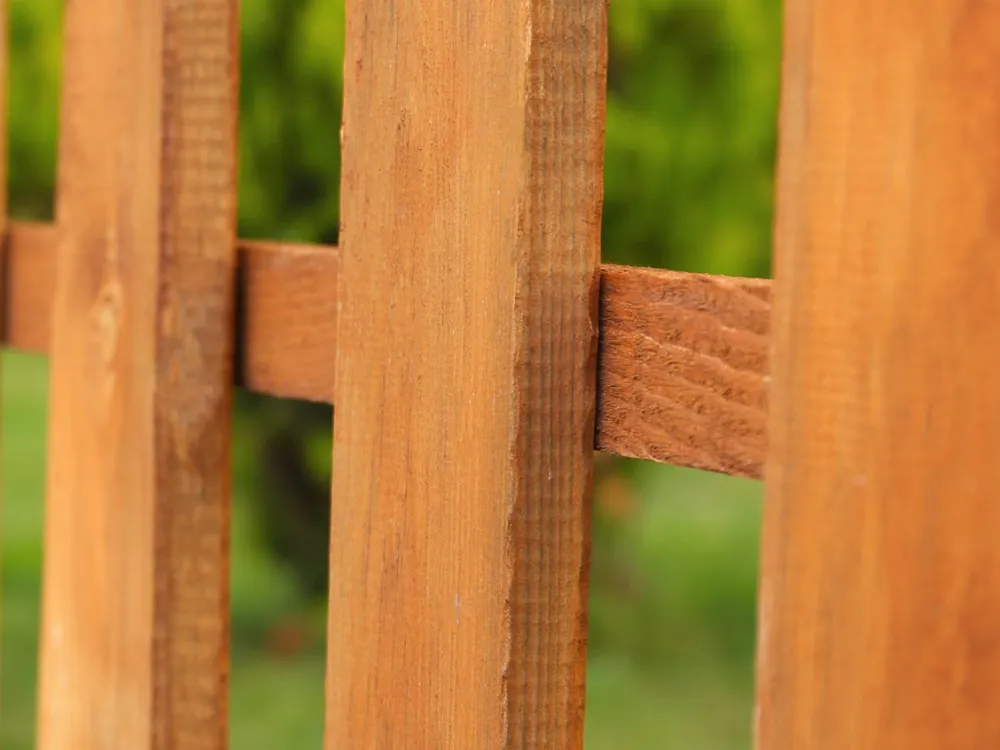
Who a picket fence suits
A picket fence suits a homeowner who wants a defined edge more than a wall. It marks the lot along a sidewalk, frames a garden, keeps a small dog or a toddler in the front yard and gives a house a finished look without shutting off the street. Every crooked picket and leaning post shows on a low, open fence, so the quality of the work is the whole point.
- Front yards where the town limits fence height.
- Garden beds and flower borders that need a clear edge.
- Homes where a traditional look matters.
- Side yards and walkways where a gate marks the entry.
- Small dogs and young children, with the gaps and latches planned for them.
A picket fence does not give privacy. If you need to block sightlines, see wood privacy fence. For plain containment where looks matter less, chain link is the other option. Compare every style on the fence styles page.
Solid Rock Fencing builds picket fence in Ohio and Pennsylvania from its base in Bristolville. It is a locally owned, family owned company, the owner was raised Amish, and the work is built on that craftsmanship.
Picket styles and spacing
Picket style comes down to the shape of the top and the pattern of the run: flat, pointed, rounded or scalloped. We found no university or government guide for picket height or picket gap, so we offer no numbers for either. Height is a legal question first and a design question second, and gap size depends on who the fence has to hold.
| Style | How it looks | Suits | Watch for |
|---|---|---|---|
| Flat-top | Square-cut tops in a straight line | Modern and farmhouse looks, easy to paint | Water sits on flat tops unless they are capped or sealed |
| Pointed or dog-ear | Tops cut to a point or with the corners clipped | The classic cottage look | Cut ends need sealing, since end grain takes in water fastest |
| Scalloped | Tops rise and dip in a curve across each section | Decorative front yards | Hard to repair a single picket without matching the curve |
| Alternating heights | Tall and short pickets in a repeating pattern | A custom look at a garden edge | Local height limits apply to the tallest point |
Gap size is a practical choice. A small dog will find a gap that a large dog never notices, and a toddler's head or a cat can pass through where an adult would not expect it. Tell us at the estimate who the fence is for, and whether a pool is nearby. Wider gaps look lighter, and narrower gaps look fuller and keep small animals in. That is a design trade, not a standard.
Height, curb appeal and local rules
A picket fence is usually a front-yard fence, so the height limit is the first thing to settle, and it is set locally. Ohio front-yard fences are often limited to about 4 feet, according to an Ohio permit guide, and the Residential Code of Ohio generally requires a building permit only for a fence over 6 feet, which most picket fence is well under. Zoning, setbacks and HOA rules still apply.
Curb appeal comes from straight lines more than from ornament. Even spacing, a level top or a clean slope-following line, posts that do not lean and a gate that closes without a push are what people notice from the street. A fence painted to match the trim ties the house to the yard, and many HOAs approve color and style, so ask before you buy paint. See fence permits and rules for who to call.
Wood versus other materials
Wood is the traditional picket material because it can be painted any color, cut to any style and repaired one board at a time. The trade is upkeep. This is general information and not a Solid Rock product list, so ask at the estimate which materials we can supply for your project.
| Material | Strong point | Trade-off |
|---|---|---|
| Wood | Any color, any cut, repaired picket by picket | Needs a finish and a spring check |
| PVC or vinyl | Needs no painting, only periodic washing (University of Georgia Extension) | Color is fixed, and color changes mean replacement |
| Vinyl-coated wood | Wood core with a protective skin | University of Georgia Extension notes it can still warp |
| Metal | A thin, formal look | A different post and gate system, and its own finish care |
Only the vinyl notes come from a source, and it covers horse fence, so treat them as general. We found no neutral comparison of cost or life between picket materials, so we make no claim about either.
Posts, rails and fasteners
The posts do the structural work, and a picket fence fails at the post and the ground line before the pickets give out. The American Wood Protection Association rates posts that touch the ground at Use Category 4A or higher, and fence pickets above ground at 3B or higher. The USDA Forest Products Laboratory says lumber marked for above-ground use only should not be set in the soil, and that decay is most severe where moisture meets air at the ground line.
- Posts need ground-contact rating and should sit below local frost depth. Depth in the Ohio and Pennsylvania documents we reviewed runs from about 30 to 42 inches, and your township or building office sets the number.
- Concrete is debated. University of Wisconsin Extension says cement can trap moisture near the top of a post, and the Forest Products Laboratory keeps concrete at least 6 inches below the ground line. Gate posts often get concrete.
- Iron nails rust and streak white paint. The Forest Products Laboratory recommends aluminum or stainless steel nails, and the treated-wood industry recommends hot-dip galvanized or stainless fasteners.
- Pickets stay off the soil, and mulch, soil and plant growth stay back from the bottoms, since moisture is what rots wood.
Post life ranges from the literature are 10 to 25 years for a pressure-treated post (Penn State Extension) and 20 to 35 years for properly treated and installed pine (Kentucky Extension). These are not a promise about any one fence.
Gates in a picket fence
A picket gate is the part guests touch, so it has to swing and latch every time. Gates and their posts take more stress than the rest of the fence, and a gate that drags usually means the hinge post has moved. Frost can push a post out of the ground, and the weight of the gate tips it further.
- Hinge posts are generally larger and set deeper than line posts.
- Structural steel hinges and a latch you can work with a full hand or a wet glove keep daily use easy.
- If children or pets are inside, ask about a latch they cannot reach and a gate that closes by itself.
- Plan the swing before the fence is built, since a gate that opens into a flower bed or a slope is annoying forever.
More on posts and bracing is on the gates page.
Slopes and uneven ground
On a slope, a picket fence either follows the ground or steps down in level sections. Following the grade keeps the bottom of the pickets a steady distance above the soil, which looks smooth on a gentle hill. Stepping keeps the tops level and works better on a steep drop, at the cost of a gap under each step. Because picket fence is low and open, the line shows from every angle, so we settle the layout on site. University of Missouri Extension notes that difficult ground adds cost to a fence and that each corner, curve and gate adds time.
Painting, staining and finishing
Most picket fence is painted or stained, and the finish is what you maintain. The Forest Products Laboratory says unfinished wood weathers to gray and recommends a water repellent at construction. It prefers pigmented penetrating stains over paint for fences, since semi-transparent stains do not form a film and so do not crack or peel. Purdue Extension says film-forming acrylic latex paint gives the most protection, so the two sources point to different choices. Paint protects longest on smooth, well-primed wood, and stain is easier to keep up on rough lumber because it fades rather than peels. Solid Rock Fencing paints and stains fences, which many fence companies do not offer. See fence painting and staining.
| Finish | Interval from the sources | Notes |
|---|---|---|
| Water repellent only | 1 to 2 years (Purdue) | Short life, simple to reapply |
| Semi-transparent stain | 2 to 4 years on new wood (Purdue) | Rough-sawn wood takes penetrating stain better |
| Paint with primer | 4 to 6 years on smooth cedar siding, 3 to 5 on rough (Forest Products Laboratory) | A second topcoat approximately doubles life |
Those figures are for similar exterior wood and not for fences, so use them as a guide to how often to look. The splash test works: if water beads, the finish is still working.
Rules for a lasting paint job
- Let new treated wood dry. A preservative maker says treated wood is typically ready about 60 days after installation, and a water drop that soaks in readily means it is dry enough.
- Paint blisters and peels when wood is above 20 percent moisture, and Kentucky Extension says paint on wet wood traps moisture.
- End grain absorbs water fastest and finishes fail there first, so seal the cut ends of each picket before assembly where possible.
- Scrape loose paint and feather the edges before repainting, and strip old finish if it has peeled or blistered badly.
Maintenance and mistakes
A picket fence needs a quick look every spring and a finish on a schedule, and the cost of skipping either shows up as soft pickets and rocking posts.
Mistakes to avoid
- Choosing a height before checking the front-yard limit.
- Skipping HOA approval for a style or a color.
- Setting above-ground rated posts in the ground.
- Using iron nails that rust and streak white paint.
- Letting mulch and soil pile against the bottom of the pickets.
- Painting wet wood, which traps moisture.
- Choosing gap size by looks without thinking about the animals and children the fence is for.
How a picket fence job goes
A picket fence job runs from a phone call to a final walk along the fence.
- Call and describe the yardTell us where the fence goes, the style you like and where the gates should be. Call (440) 241-4312.
- FREE estimate on siteWe look at the line, any slope, the walk and the gate openings, and talk through style and finish.
- Check the rules and the lineYou confirm the property line, and front-yard height limits and HOA rules are checked before work starts.
- Locate utilitiesThe digging crew calls 811 first: at least two working days ahead in Ohio and three business days in Pennsylvania. See call 811.
- Set posts and railsCorner and gate posts go in first, then line posts, then rails.
- Attach pickets, hang gates and finishPickets go on at even spacing, gates are hung and checked, and we walk the fence with you.
Solid Rock Fencing offers a 10 year workmanship warranty, with written terms in the estimate. It covers defects in workmanship, not weather, impact, animals or normal wood aging.
Get your FREE estimate
Tell us what you are fencing and where. We will talk it through with you and come out to walk the line.
Questions we hear
How tall can a picket fence be in my front yard?
Local rules decide. Ohio front-yard fences are often limited to about 4 feet, and one township we reviewed sets 3 feet in the front setback zone. Cities, townships and HOAs differ, so confirm with your local zoning office before you choose a height. This is general information, not legal advice.
Do I need a permit for a picket fence?
The Residential Code of Ohio generally requires a building permit only for a fence over 6 feet, and most picket fences are lower. Local zoning rules, setbacks and HOA approval can still apply, and Pennsylvania municipalities may require their own zoning permit. Check with your local office before you build.
How far apart should pickets be?
We found no university or government source that gives a picket gap, so we do not quote one. The right gap depends on who the fence has to hold. A small dog or a toddler needs narrower spacing than a large dog, and a fence near a pool needs a local code check. Tell us at the estimate.
How often does a picket fence need painting or staining?
Purdue Extension gives 2 to 4 years for a semi-transparent oil-base stain on new wood and 1 to 2 years for a water repellent. Paint schedules vary by product. Splash water on the wood: if it beads, the finish still works. These are general intervals for exterior wood, not fence-specific.
What kind of posts should a picket fence have?
Posts that touch the ground should be rated Use Category 4A or higher by the American Wood Protection Association. Lumber marked for above-ground use only should not go in the soil. Posts also need to sit below local frost depth to resist heave, which runs from about 30 to 42 inches in the documents we reviewed.
Can a picket fence work as a pool fence?
Maybe, but check first. Pool barriers are commonly required to be at least 48 inches high with a self-closing, self-latching gate, and the rules on openings vary by place. Ask your local building department whether a picket fence can serve as the barrier and what gap it allows before you buy.
Can you repaint or repair a picket fence you did not build?
Yes. Solid Rock Fencing does fence repair and also paints and stains fences, which many fence companies do not offer. Call (440) 241-4312, describe the fence and what is wrong with it, and we will set up a FREE estimate to look at it in person.
Does Solid Rock Fencing build picket fence?
Yes. Solid Rock Fencing is a locally owned, family owned fence and gate contractor based in Bristolville, Ohio, serving Ohio and Pennsylvania. Call (440) 241-4312 and ask for a FREE estimate, and tell us the style you like, the length and where the gates go.
- American Wood Protection Association residential use category guide
- USDA Forest Products Laboratory, Protecting Wood Fences for Yard and Garden (1979)
- USDA Forest Products Laboratory, Finishing of Wood (AH-647)
- Purdue Extension, Exterior wood finishing (NCR-132)
- University of Wisconsin Extension, Setting fence posts
- Penn State Extension, Fence Planning for Horses
- University of Georgia Extension, Fences for Horses (B1192)
- Kentucky Extension, Fence posts (FORFS 03-05)
- University of Missouri Extension G1193, fence costs
- Viance, Staining decks and fences
- Design World, Fasteners for pressure-treated wood
- Ohio fence permit guide (Residential Code of Ohio summary)
- City of Columbus fences form
- Poland Township zoning, fences and walls
- Pennsylvania Uniform Construction Code, Chapter 403
- Penn State Housing Research Center, A Quick Guide to the Residential Provisions of the UCC
- Mercer County Regional Planning Commission, municipal zoning ordinances
- Trumbull County Planning Commission, plats and zoning
- Violet Township, Ohio pool barrier requirements
- OHIO811 notification FAQ
- PA One Call, excavators